

Signal-to-Outcome™
T&T's proprietary methodology turns signals from your operations into measurable outcomes — through a repeatable, productized loop refined across 300+ implementations.

Why this exists
Most companies have data. What they don’t have is a repeatable path from “something changed” to “here’s what to do next, who owns it, and how we’ll know it worked” — without expensive projects, heavy consulting, and long timelines.
T&T packages that path into a platform designed for SMBs and mid-sized companies. The methodology — Signal-to-Outcome — is the IP. The platform is how we deliver it.
The Signal-to Outcome™ methodology
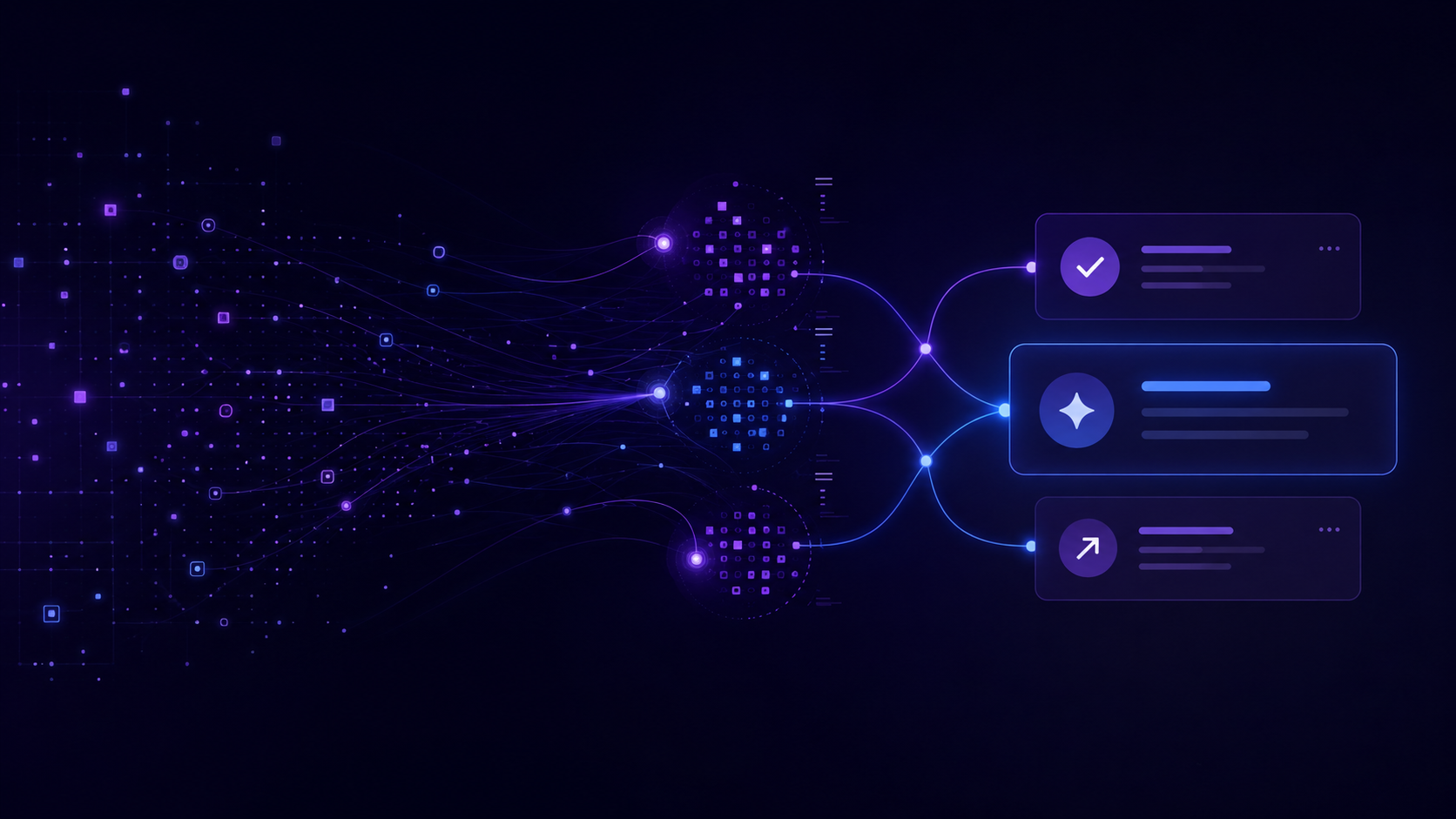
Alerts start the loop
KPI alerts are generated by area (sales, finance, operations, HR, logistics) when something matters: variance, trend changes, emerging risk, or performance drift. Alerts are not notifications — they are entry points into a structured decision path.
What's productized
alert templates accumulated across 300+ implementations, organized by functional area, with thresholds, severity logic, and routing built in. You’re not configuring alerts from scratch — you’re activating patterns that already work.
 Phase 2 — Advise
Signals become recommended actions
This is where the methodology earns its keep. Each signal opens a structured investigation path that leads managers from what happened to why it happened.
Related signals are grouped into insight clusters that tell a coherent story. CLEO accelerates the path by:
- Suggesting likely drivers based on patterns in your data
- Flagging side effects to monitor in adjacent areas
- Recommending next best actions, with linked evidence
- Surfacing analogous situations from prior outcomes
What’s productized: investigation paths per area, recommended-action patterns, and insight cluster templates — all refined across hundreds of deployments. Generic AI can summarize. T&T can advise.
 Phase 3 — Activity
Advice becomes owned, trackable execution
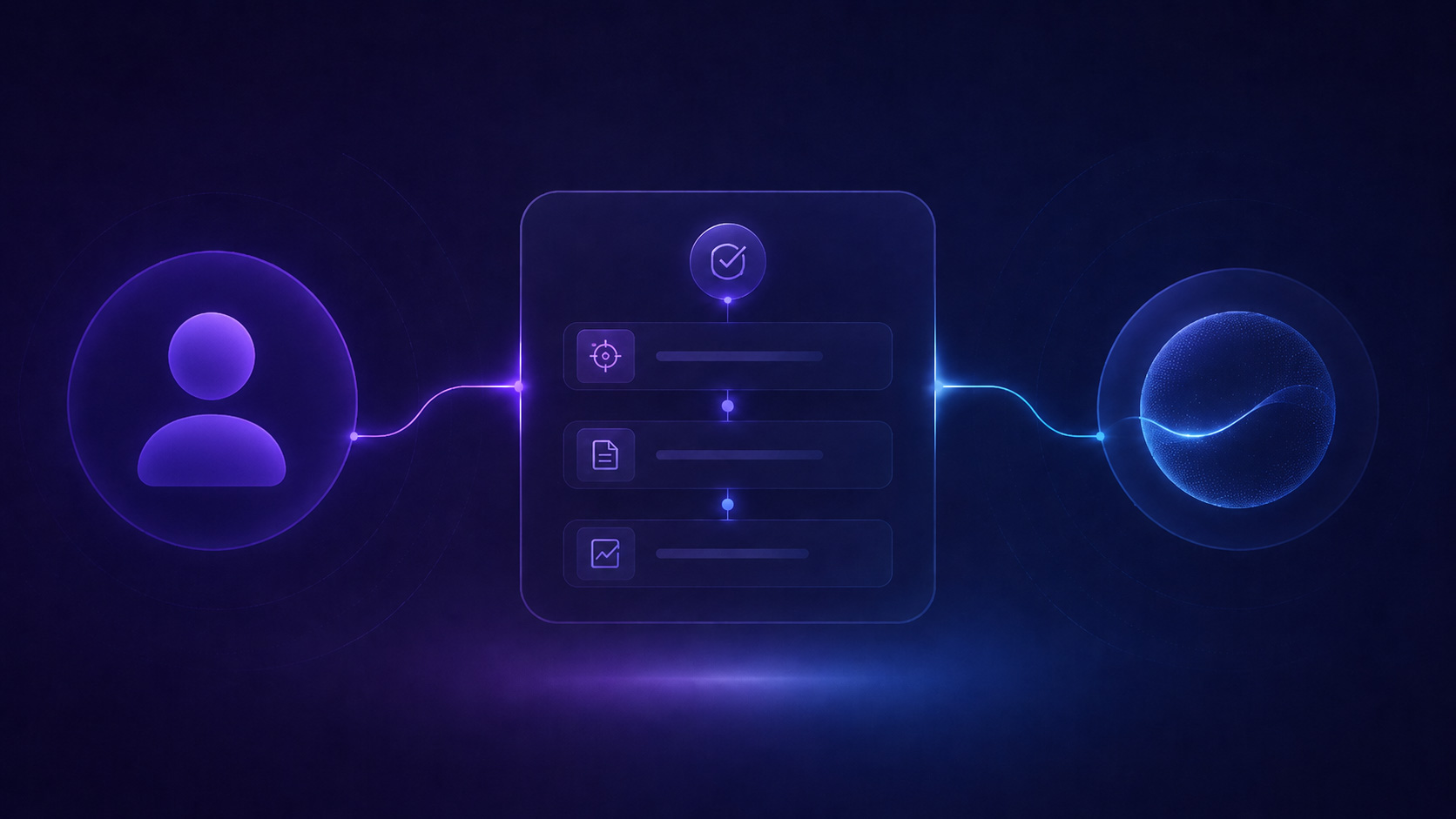
Advice that doesn’t produce action is not value — it’s a slide deck. T&T converts every Advise output into an Activity: a structured, owned, trackable unit of work.
An Activity includes:
- Insight summary — what changed and why (drivers, segments, evidence)
- Recommended action — what to do next, with rationale
- Ownership — responsible person, team, or AI agent
- Execution plan — due date, priority, dependencies
- KPI targets — baseline, target, expected impact
- Control loop — status tracking and KPI movement during execution
- Outcome capture — results recorded for learning and methodology refinement
Activities are designed for humans and AI agents from day one. Today, your team executes Activities with CLEO advising. Starting in 2026, select Activities are executed by AI agents under CLEO orchestration — for high-volume, well-bounded scenarios like collections follow-up, vendor reconciliation, and routine compliance checks. Humans and agents work on the same Activities, against the same KPIs, under the same accountability.
 Phase 4 — Outcome
The loop closes — and learns
When execution finishes, the outcome is compared to the target KPI. What worked, what didn’t, and what surprised becomes structured learning the organization — and the methodology — can reuse.
– KPI movement is measured against the recommended action
– Outcomes feed CLEO’s next round of recommendations
– Patterns from outcomes refine alert templates and investigation paths over time
This is what “productized methodology” actually means: the loop improves with every deployment, and you inherit improvements from every other T&T customer running the same areas.
Why this is a moat
- Dario Amodei’s framing of the post-AI SaaS world is direct: software complexity is no longer defensible. He’s right. But Signal-to-Outcome is not defended by software complexity. It is defended by:
- Methodology IP — 300+ implementations distilled into productized patterns — process knowledge, not code
- System of record — the loop runs on data we hold, not data we analyze from elsewhere
- Closed-loop execution — the Activity layer is where horizontal AI does not yet operate
- Compounding learning — every outcome refines the methodology for every customer
Where this lives in the platform
- Decisions Suite — alerts, investigation paths, insight clustering
- Collaboration Suite (Activities) — assign, coordinate, execute, control — with humans and agents
- Decision metadata layer — connects KPIs → signals → advice → activities → outcomes
- CONFIG — fast setup with minimal consulting
- CLEO — runs the loop and learns from it
Deployment & Support — CONFIG
Why this is a moat
Dario Amodei’s framing of the post-AI SaaS world is direct: software complexity is no longer defensible. He’s right. But Signal-to-Outcome is not defended by software complexity. It is defended by:

Methodology IP

System of record

Closed-loop execution

Compounding learning

Let your signals speak — and control what happens next.